How to Start a Trucking Business Using Credit (Cargo Van to Box Truck – No CDL Required)
The logistics and delivery industry in the United States is booming. With e-commerce reaching new heights, businesses need more delivery capacity than ever before. And the demand keeps growing.
But here’s what most people don’t realize: you don’t need tens of thousands of dollars in cash to start a trucking business. You don’t need years of experience. And for cargo vans and many box trucks, you don’t even need a CDL (Commercial Driver’s License).
In fact, the best-kept secret in the logistics industry is that credit can be your starting capital.
If you understand how to leverage personal or business credit strategically, you can start a profitable trucking operation, generate substantial monthly income, and scale from one vehicle to multiple vehicles—all without significant cash reserves.
In this guide, we’re going to show you exactly how.
Why Cargo Vans & Box Trucks Are the Best Entry Point
When most people think “trucking business,” they imagine 18-wheelers and semi-trucks. But that’s where they’re wrong.
The real opportunity—and the fastest path to profitability—is in cargo vans and box trucks.
Cargo Vans: Your Fastest Start
What they are:
- High-roof, enclosed cargo space
- Typically 200-350 cubic feet of space
- Seats 2-3 people
- Fuel efficient
- Best options: Mercedes-Benz Sprinter, Ram ProMaster, Ford Transit
The Top Cargo Van Models:
Mercedes-Benz Sprinter
- Industry standard for reliability and longevity
- Cargo capacity: 250-350 cubic feet
- GVWR: 10,000-14,000 lbs (check specific model)
- Fuel efficiency: 18-22 MPG
- Used cost: $25,000-$50,000 (depending on year/mileage)
- Advantages: Superior reliability, holds resale value, easy to maintain, parts readily available
- Best for: Long-term operators planning to scale
Ram ProMaster
- American-made alternative, gaining popularity
- Cargo capacity: 280-350 cubic feet
- GVWR: 10,000-14,000 lbs
- Fuel efficiency: 18-21 MPG
- Used cost: $22,000-$45,000
- Advantages: Lower initial cost, good warranty options when newer, spacious interior
- Best for: Budget-conscious startups, modern features
Ford Transit
- Popular workhorse option
- Cargo capacity: 200-300 cubic feet
- GVWR: 10,000-14,000 lbs
- Fuel efficiency: 17-20 MPG
- Used cost: $20,000-$42,000
- Advantages: Widely available, competitive financing, large dealer network
- Best for: Easy parts sourcing, nationwide support
Why they’re ideal for beginners:
- No CDL required (under 10,000 GVWR in most states)
- Affordable to finance ($20,000-$60,000 depending on age/condition)
- Lower operating costs than larger vehicles
- Easy to find loads for last-mile delivery, Amazon Flex, local deliveries
- Maximum flexibility for local and regional work
- Low insurance costs compared to larger commercial vehicles
Real earning potential:
- Daily: $600-$900
- Weekly: $4,000-$6,000
- Monthly: $9,000-$16,000 (after fuel and expenses)
Box Trucks: The Next Level
Once you’re established with a cargo van, box trucks are your natural next step.
What they are:
- 16ft, 20ft, or 26ft enclosed cargo boxes
- Much larger capacity (400-1,500 cubic feet)
- Can carry heavier loads
- Typically cost $30,000-$80,000 (used)
Key advantage:
- Still no CDL required up to 26ft (under 26,001 GVWR in most states)
- Higher load capacity = higher paying loads
- Better for regional work (multi-state loads)
- Faster scaling into a fleet business
Real earning potential:
- Daily: $900-$1,300
- Weekly: $6,000-$9,000
- Monthly: $16,000-$20,000 (gross for owners/operators)
Cargo Van vs. Box Truck: Your Growth Path
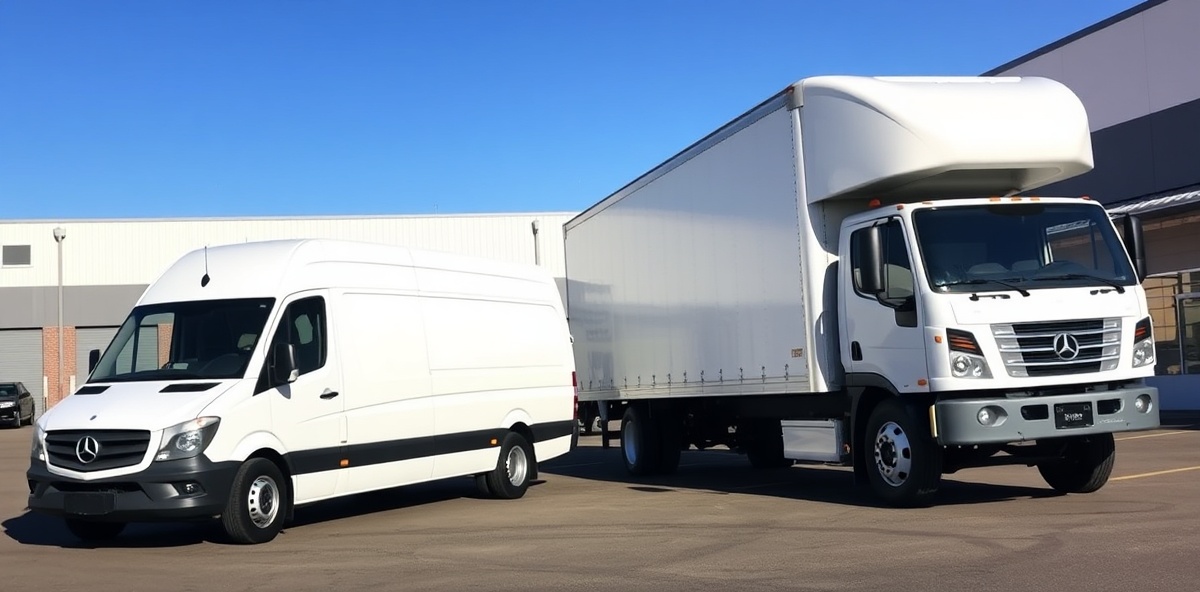
The Progression: Most successful trucking entrepreneurs start with a cargo van (like the Sprinter shown above on the left), prove the business model, and then scale into box trucks (like the 26ft shown on the right). This two-vehicle approach is the fastest path to scaling from 1 vehicle → multiple vehicles → fleet operations.
Why this matters:
- Cargo van = lower risk, fast profitability, easier financing
- 26ft box truck = higher earnings, larger capacity, fleet foundation
- Starting small and scaling is safer than overcommitting to expensive equipment
How to Start Using Personal or Business Credit
This is where most people get stuck. They think, “I don’t have $50,000 in cash for a vehicle.”
The solution: Use credit.
Option 1: Personal Credit (FICO-Based Funding)
Your personal credit score (FICO score) is a powerful tool for business funding.
How it works:
- Get a business or personal loan using your personal credit
- Qualify for vehicle financing at banks or dealerships
- Use the funds to buy or lease your cargo van or box truck
What lenders look for:
- Credit score (ideally 650+, but 620+ possible with the right lender)
- Income verification (W2, tax returns, or proof of other income)
- Debt-to-income ratio
- Employment history
Typical loan amounts:
- $20,000-$75,000 depending on creditworthiness
- Terms: 36-72 months
- Rates: 6%-15% depending on credit score and lender
Pros:
- Relatively fast approval (5-14 days)
- No business formation required
- Direct access to vehicle purchases
Cons:
- Personal liability on the loan
- Your personal credit is used
- Higher interest rates if credit is fair/poor
Option 2: Business Credit (EIN-Based Funding)
If you have or are willing to form an LLC or S-Corp, you can build business credit separate from your personal credit.
How it works:
- Form an LLC or S-Corp
- Get an EIN (Employer Identification Number) from the IRS
- Build business credit through business accounts and trade lines
- Apply for business loans using your EIN (not your SSN)
- Use funds to finance vehicles
What lenders look for:
- Business credit score (Paydex, D&B rating)
- Years in business (ideally 6+ months)
- Revenue and profit
- Bank statements
- Business structure
Typical business loan amounts:
- $25,000-$100,000+
- Terms: 24-60 months
- Rates: 8%-18% depending on business profile
Pros:
- Separates personal and business liability
- Builds asset for your business
- Access to higher loan amounts
- Better for scaling (can get multiple business loans)
Cons:
- Requires business formation (LLC, S-Corp)
- Takes time to build business credit (3-6 months)
- More documentation required
- Lenders want to see business performance
Startup Costs Beyond the Vehicle
Remember, the vehicle isn’t your only cost. Here’s what else you’ll need to fund:
- Insurance ($150-$400/month)
- Registration & tags ($200-$500/year)
- Maintenance fund ($1,000 initial + ongoing)
- Fuel ($200-$400/week depending on vehicle)
- Phone/GPS/communication ($50-$100/month)
- DOT/MC numbers ($300-$500 one-time)
- Working capital ($2,000-$5,000 for first weeks)
Total startup capital: $5,000-$10,000 for cargo van, $8,000-$15,000 for box truck
This is where structured credit becomes essential. Your credit doesn’t just buy the vehicle—it covers your operating costs too.
Introducing ACP (ASP Credit Program)
Here’s the challenge most people face: They don’t know how to structure their credit for maximum approval odds.
They apply to random lenders, get rejected, and give up.
That’s where ACP (ASP Credit Program) comes in.
What ACP Does
ACP is a comprehensive credit guidance and funding strategy system that:
1. Analyzes Your Current Credit Profile
- Reviews your personal credit score, history, and debt
- Evaluates your income and employment stability
- Identifies strengths and weaknesses in your profile
2. Builds Your Funding Strategy
- Determines whether personal or business credit is better for YOU
- Plans which lenders to apply to (in the right order)
- Optimizes timing and approach for maximum approvals
3. Structures Your Credit For Success
- If building business credit: helps you establish EIN, form business entity, and build initial credit profile
- If using personal credit: helps you optimize your FICO score and debt-to-income ratio
- Guides you through each step of preparation
4. Increases Your Approval Odds
- Connects you with lenders experienced in vehicle financing
- Helps you present the strongest application
- Advises on loan structure and terms
- Guides you to alternative lenders if traditional banks decline
5. Ongoing Support
- Helps you manage your credit during the funding process
- Provides guidance on post-approval steps
- Advises on scaling (getting additional vehicles)
Important Disclaimer
Funding approvals depend on individual credit profile and financial history. No program guarantees loan approval. Results vary based on your unique situation, credit score, income, and the specific lender’s requirements.
ACP significantly increases your odds of approval by optimizing your strategy—but individual results depend on your specific financial profile.
How to Make Money in Trucking (Monetization)
Once you have your vehicle financed and registered, it’s time to generate revenue.
This is where many people succeed or fail. It’s not just about having a truck—it’s about having the RIGHT strategy to find profitable loads.
Method 1: Load Boards & Freight Marketplaces
Load boards are digital platforms where shippers post loads and truckers bid on them.
How it works:
- Sign up for a load board (see list below)
- Browse available loads in your area
- Select loads that match your vehicle size and schedule
- Bid or apply for the load
- Pick up shipment and deliver
- Get paid
Best load boards for cargo vans & box trucks:
- Shipt, Amazon Flex (package delivery, highest volume)
- Fiverr Delivery, TaskRabbit (local deliveries)
- Roadway, Freight.com (freight matching)
- Universal Truckload Services (regional loads)
- Contract with local brokers (consistent work)
Realistic earnings:
- Cargo van: $600-$900/day
- Box truck: $900-$1,300/day
- Multi-load days: $1,300-$2,000+/day
Method 2: Working With Brokers & Companies
Instead of hunting for individual loads, you can work directly with freight brokers or companies.
How it works:
- Find brokers or 3PL companies in your area
- Apply to be part of their carrier network
- They assign you loads automatically
- You pick up, deliver, get paid
Advantages:
- Consistent work (no hunting for loads)
- Better predictability
- Often higher pay rates
- Relationship-based (more stable)
Where to find brokers:
- Local logistics companies
- Online broker directories
- Networking with other drivers
- Industry associations
Method 3: Dedicated Contracts
Some companies hire dedicated carriers to run specific routes repeatedly.
How it works:
- You commit to running specific routes
- Regular pickup/delivery schedule
- Consistent weekly pay
- Job stability
Realistic earnings:
- Weekly pay: $4,000-$6,000 (cargo van)
- Weekly pay: $6,000-$9,000 (box truck)
- Stability: Very high (regular routes)
Daily Earning Example
Let’s say you have a 26ft box truck and you’re working with a broker:
Monday:
- Load 1: $550 (regional freight)
- Load 2: $450 (return load)
- Daily: $1,000
Tuesday:
- Dedicated contract run: $800
Wednesday:
- Load board work: $900
Thursday:
- Broker assigned loads: $850
Friday:
- Multi-load day: $1,100
Weekly total: $4,650 Monthly total (4 weeks): $18,600 After expenses (fuel, insurance, maintenance): $12,000-$15,000 monthly profit
This is realistic for an established operator with good load selection.
Scaling the Business
Starting with one cargo van is just the beginning. The real money comes from scaling.
Stage 1: One Cargo Van (Months 1-6)
Your role: Driver + operator Monthly income: $4,000-$6,000 (after expenses) Focus: Learn the business, build relationships, optimize loads
Stage 2: Multiple Cargo Vans (Months 6-12)
What changes:
- You hire a second driver
- You manage two vehicles
- You focus on load sourcing, not driving
Your income: $6,000-$12,000/month (from 2 vehicles minus driver salary) Hire strategy: Find experienced drivers or train them
Stage 3: Box Trucks (Year 1+)
What changes:
- Move to larger capacity vehicles
- Higher paying loads
- Better profit margins
Income potential: $10,000-$20,000+/month (from 2-3 box trucks)
Stage 4: Fleet Operation (Year 2+)
What you’re building:
- 5+ vehicles (mix of cargo vans and box trucks)
- Team of drivers
- Potential broker contracts with guaranteed volume
- Eventually: Your own logistics brokerage
Income potential: $50,000+/month Business model shifts: You’re now a logistics company, not just a driver
Key to scaling:
- Reinvest early profits into second vehicle
- Hire reliable drivers (most important part)
- Build relationships with brokers and shippers
- Optimize operations (minimize downtime, maximize load quality)
Common Mistakes to Avoid
The difference between success and failure in trucking often comes down to avoiding critical mistakes.
Mistake 1: Bad Credit Usage
What goes wrong:
- People get a loan and immediately max out credit cards
- They apply for multiple loans at once (too many hard inquiries)
- They default on the truck payment (worst decision)
How to avoid it:
- Get the truck loan you need—nothing more
- Don’t take on additional debt while scaling
- Set up automatic payments (never miss a payment)
- Build operating reserves before scaling
Mistake 2: Overfinancing the Vehicle
What goes wrong:
- Paying $60,000 for a $40,000 vehicle (upside-down loan)
- 72-month loans with 15%+ interest (too expensive)
- Buying brand-new instead of 2-4 year old vehicles
How to avoid it:
- Buy 2-4 year old vehicles (better value)
- Keep loan terms to 48-60 months max
- Aim for 10-12% interest or better (shows good credit)
- Don’t let emotions drive the purchase
Mistake 3: Not Understanding Operating Expenses
What goes wrong:
- Thinking you keep 100% of earnings (you don’t)
- Underestimating fuel costs ($200-$400/week)
- Forgetting insurance ($2,000-$5,000/month for fleet)
- Maintenance surprises ($500-$2,000/month as fleet grows)
How to avoid it:
- Calculate all expenses before you start
- Set aside 30-40% of gross income for expenses
- Build maintenance reserves ($1,000/month per vehicle)
- Track every dollar in a spreadsheet
Mistake 4: Poor Load Selection
What goes wrong:
- Taking low-paying loads to “stay busy”
- Driving long distances for small payouts
- Not negotiating rates
- Wasting time on time-consuming loads
How to avoid it:
- Only take loads that pay $1.50+/mile (minimum)
- Say no to unprofitable work
- Build relationships with brokers (they give better loads)
- Negotiate rates when possible
Mistake 5: Inconsistent Business Structure
What goes wrong:
- Operating as a sole proprietor (personal liability)
- Not separating personal and business finances
- No business registration (limited growth potential)
- Tax complications
How to avoid it:
- Form an LLC or S-Corp immediately
- Get an EIN
- Open a business bank account
- Keep personal and business separate
- Work with a CPA for tax planning
Conclusion: Your Path to Trucking Business Success
The opportunity is real. The demand is real. And you don’t need a fortune in cash to start.
Here’s what we know to be true:
-
Cargo vans and box trucks are the fastest entry point into logistics (no CDL, low startup cost, quick path to profitability)
-
Credit is your starting capital (personal or business credit can fund your vehicle and operating costs)
-
Smart monetization = consistent income (load boards, brokers, and dedicated contracts provide multiple revenue streams)
-
Scaling is the real wealth builder (one vehicle makes you money; multiple vehicles build generational wealth)
-
Avoiding mistakes makes the difference (bad credit usage, overfinancing, and poor load selection are the main failure points)
Your Next Steps
If you’re serious about starting a trucking business using credit, here’s what to do:
Step 1: Evaluate Your Credit Understand your current financial position. Do you have personal credit, business credit, or both? What’s your credit score? What’s your income?
Step 2: Get a Strategy Don’t just apply to random lenders. A structured credit and funding strategy increases your approval odds dramatically.
Step 3: Get Approved With the right strategy and preparation, you can get approved for $30,000-$80,000+ to finance your first vehicle.
Step 4: Secure Your Vehicle Buy or finance your cargo van or box truck. Set it up with proper registration, insurance, and DOT compliance.
Step 5: Start Finding Loads Join load boards, connect with brokers, and start generating revenue.
Step 6: Optimize & Scale Once you’re profitable (Month 3-6), reinvest into a second vehicle and begin scaling.
Special Offer: Complete Trucking Business System
Our ASP3PL + ACP Combined System helps you:
- Build or repair your credit for maximum approval odds
- Get approved for vehicle financing (personal or business)
- Get your MC & DOT numbers (automated setup)
- Connect with freight brokers (we provide the network)
- Access load boards (integrated platform)
- Scale your fleet (systems and processes for growth)
This isn’t just advice. This is a complete, done-for-you system.
If you’re ready to start your trucking business, book a consultation with our team. We’ll review your specific situation and show you exactly how much you can finance, which loads you can target, and how quickly you can become profitable.
Book Your Trucking Business Consultation – Free strategy session, no obligation.
Your logistics business is waiting. Let’s build it together.
Ready to transform your financial future with a profitable trucking business? Our credit system has helped hundreds of entrepreneurs start from zero and build six-figure logistics operations.
Key takeaway: You don’t need cash. You need the right credit strategy. And we’ve got it.
About the Author
Jose Tavera is the CEO & Founder of ASP Worldwide Corp, with 5 years of experience helping entrepreneurs build and scale profitable businesses through proven systems and expert guidance.
Connect with Jose Tavera →Ready to Implement These Strategies?
Join thousands of entrepreneurs using ASP Worldwide Corp's proven All-In-One Business System.
Get Started Now